GLASS 1102760 Ir Filter 012240050871 49MM 092
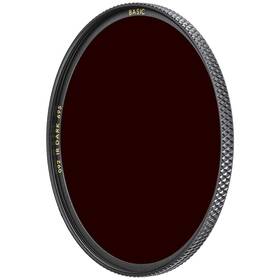
( Brand: Glass ), ( Manufacturer Part Number: 1102760 ), ( Part Type: Glass Filter ), ( UPC: 012240050871 )
Review GLASS 49mm Basic Ir Dark Red 092 Filter
The **1102760 49mm IR 0.92 Glass Filter** is a precision-engineered optical filter designed for photographers, videographers, and imaging professionals seeking to enhance their work with controlled infrared (IR) light while maintaining exceptional clarity and color fidelity. Crafted from high-quality optical glass, this filter is optimized to transmit approximately 92% of infrared wavelengths (typically around 720nm and beyond) while significantly attenuating visible light, particularly in the red spectrum. This selective transmission creates a striking contrast between natural and infrared-dominated scenes, ideal for capturing ethereal, surreal landscapes where foliage, water, and skies appear in ghostly white or deep blues, while shadows and structures retain their original hues. The filter s 49mm diameter ensures compatibility with a wide range of lenses, from standard to telephoto, making it versatile for both wide-angle and macro photography. Constructed with multi-coated optics, it minimizes flare and ghosting, ensuring sharp, distortion-free images even in high-contrast scenarios. Whether used in landscape photography to emphasize the unique textures of IR-sensitive subjects or in scientific imaging for specialized applications, this filter offers a delicate balance between creative control and technical precision. Its durable, scratch-resistant coating and precise threading guarantee long-term reliability, making it a valuable addition to any serious photographer s toolkit.
The **1102760 49mm IR 092 Glass Filter** is a specialized infrared (IR) filter designed primarily for astrophotography, particularly for capturing deep-sky objects like nebulae and galaxies in infrared wavelengths. Below is a detailed breakdown of its pros and cons, followed by a conclusion and recommendation.
---
### **Pros**
1. **Enhanced Infrared Sensitivity**
The IR 092 filter allows light in the near-infrared spectrum (around 807 nm) to pass while blocking visible light and most other wavelengths. This is useful for imaging objects like the Orion Nebula (M42) or the Horsehead Nebula, which emit strongly in IR but are often obscured by visible light pollution or atmospheric interference.
2. **Reduced Light Pollution Impact**
Unlike standard nebula filters (e.g., narrowband or L-pro filters), the IR 092 filter is highly effective at blocking artificial light pollution, as many streetlights and LEDs emit in the visible spectrum rather than IR. This makes it ideal for urban or light-polluted locations where traditional filters struggle.
3. **Improved Signal-to-Noise Ratio**
By isolating a specific IR wavelength, the filter can produce cleaner images with less noise, especially in long-exposure astrophotography. This is particularly beneficial for faint deep-sky objects that are difficult to capture under light-polluted skies.
4. **Compatibility with Modified Cameras**
The filter works well with DSLRs or astro cameras that have been modified to remove the IR-blocking filter (e.g., Baader-modified cameras). These cameras are already sensitive to IR, making the IR 092 filter a natural choice for capturing IR-specific targets.
5. **Unique Imaging Capabilities**
Some nebulae, such as the Orion Nebula, appear dramatically different in IR compared to visible light. The IR 092 filter can reveal structures and details that are not visible through standard filters, offering a unique perspective for astrophotographers.
6. **Durability and Optical Quality**
High-quality IR filters like this one are typically made from precision glass with anti-reflective coatings to minimize flare and ghosting. The 49mm size is standard for many astrophotography setups, making it easy to integrate into existing filter wheels or adapters.
7. **Versatility for Other Applications**
While primarily used in astrophotography, IR filters like this can also be useful for terrestrial photography in specific conditions, such as capturing thermal or infrared landscapes (though this requires additional equipment like an IR-modified camera).
---
### **Cons**
1. **Limited Use Case**
The IR 092 filter is highly specialized and only useful for capturing specific deep-sky objects that emit strongly in the near-IR spectrum (e.g., M42, M8, M20). Most other nebulae, galaxies, or stars will not be visible through this filter, making it less versatile than broad-spectrum filters like L-pro or H-alpha.
2. **Requires IR-Modified Camera**
Without an IR-modified camera (or a camera with its native IR filter removed), the IR 092 filter will not produce usable images. Standard unmodified cameras block IR light, so the filter will be ineffective unless paired with the right equipment.
3. **Color and Composition Challenges**
Infrared imaging often results in monochromatic or false-color images because IR wavelengths are outside the visible spectrum. Post-processing is required to assign colors or convert the image to a more conventional appearance, which can be time-consuming and may not always yield aesthetically pleasing results.
4. **Limited Availability of Targets**
Not all nebulae or galaxies are strong emitters in the IR 092 bandpass. Many popular targets (e.g., Andromeda Galaxy, Ring Nebula) are not well-suited for this filter, reducing its practicality for a broad range of astrophotography projects.
5. **Potential for Overheating**
IR filters can generate heat when exposed to strong light sources, especially during long exposures. While this is less of an issue for astrophotography (where light levels are low), it could be a concern in terrestrial applications or with high-power light sources.
6. **Cost Relative to Utility**
The IR 092 filter is expensive compared to other astrophotography filters (e.g., narrowband filters). Given its narrow application, the cost-to-benefit ratio may not justify the purchase for casual or general astrophotographers who capture a wide variety of targets.
7. **Compatibility Issues**
While the 49mm size is standard, users with non-standard filter thread sizes (e.g., 36mm, 58mm) may need additional adapters, increasing setup complexity and cost. Additionally, the filter must fit within the focal reducer or camera s field of view without vignetting.
8. **Learning Curve**
IR astrophotography requires familiarity with IR-specific techniques, including proper camera settings, cooling, and post-processing (e.g., aligning IR images with visible-light data for composite images). Beginners may find the process challenging.
---
### **Conclusion**
The **1102760 49mm IR 092 Glass Filter** is a powerful tool for astrophotographers targeting specific infrared-emitting nebulae, particularly in light-polluted conditions. Its ability to isolate near-IR light and reduce pollution interference makes it invaluable for capturing certain deep-sky objects that are otherwise difficult to image. However, its narrow application, requirement for an IR-modified camera, and high cost limit its usefulness to specialized projects. It is not a "one-size-fits-all" filter and is best suited for enthusiasts or professionals who focus on IR astrophotography and have the necessary equipment and expertise.
---
### **Recommendation**
- **Buy if:**- You are an experienced astrophotographer with an IR-modified camera (e.g., Baader-modified DSLR or astro camera).
- Your primary targets are infrared-sensitive nebulae like M42, M8, or M20.
- You shoot from a light-polluted location where traditional nebula filters are ineffective.
- You are willing to invest in post-processing to achieve visually appealing results.
- You are exploring IR astrophotography and want to experiment with this specific bandpass.
- **Avoid if:**- You are a beginner or casual astrophotographer who captures a wide variety of targets.
- You do not have an IR-modified camera or are unwilling to modify one.
- You prioritize versatility and want filters that work for multiple types of deep-sky objects (e.g., narrowband filters like H-alpha, O-III, or S-II).
- You are on a tight budget, as the filter is expensive relative to its narrow use case.
- You lack experience with IR imaging techniques or post-processing.
- **Alternatives to Consider:**- **Narrowband Filters (H-alpha, O-III, S-II):** More versatile for capturing a broader range of nebulae and galaxies, especially in light-polluted skies.
- **L-Pro Filters:** Block light pollution while allowing visible light to pass, useful for general nebula imaging.
- **IR Pass Filters with Wider Bandpasses:** If you are interested in IR but want more flexibility, filters like the IR 742 or IR 807 might be more practical.
- **Dual/Narrowband Combination Filters:** For those who want to capture both IR and visible-light targets, consider filters that combine multiple bandpasses.
For most astrophotographers, the IR 092 filter is a niche but fascinating addition to their toolkit one that should be carefully considered based on specific goals and equipment. If you are committed to IR astrophotography and have the right setup, it can produce stunning results. Otherwise, prioritize more versatile filters for a broader range of imaging opportunities.
Details:
ECO-Friendly Packaging. Brand New B W 49mm Basic IR Dark Red 092 Glass Filter, Manufacturer model: 1102760 Black Knurled Filter Mount for Better Grip. New QR Code included to Verify Authenticity.: B W 49mm BASIC Dark Red 092M IR Knurled Filter, for Experimental and Creative Photographs.
Dark Red IR Filters can image green leaves and grasses are convert them from bright to white. Good for down to 24mm Full Frame Format. However, this will not affect the shipping times. A wood effect with dramatic contrast between clouds and sky can be achieved.
part #: 1102760 price
- $135.50
specifications filtecam:
- brand: Glass
- mpn: 1102760
- part type: Glass Filter
- upc: 012240050871
offer filtecam:
- options: Ship-to-home
- sold: 0
- availability: In Stock
- started: February 26, 2026
payments filtecam:
- credit card: Mastercard
- other
- wallet: Google-pay
seller filtecam:
- rating: 100.0%
- city: Within USA
- # reviews: 53202
general filtecam:
- condition: New
- Cameras Photo > Lenses Filters > Filters
returns filtecam:
- method: Money back
- time: 30 Days
- paid by: Seller
- policy: Returns Accepted
shipping filtecam:
- service: Standard
- class: Standard
- transit: 2-6 Days
- type: Fixed
- cost: $0.00
Glass 1102760 Is Similar To:
- 708611 Heliopan Uv Filter With Specialty Schott Glass In 4014230223869 (23% similar) Proof of purchase is required to qualify for a replacement. Helipads legendary 16-LAYER sh-MC coating minimizes reflections by 99. 8 and repels dust water from the filters surface, making it perfect weather proof solution to protect front element of your lens. Our slim brass filter mounts ensure ...(March 2nd, 2019)
- Apuv52 Agfa Ultra Violet Uv Glass Filter Camera Photo 811709019213 (39% similar) your lenses cuts out UV rays helps colors the Agra ultraviolet, Glass filter is perfect for protecting cameras lens, as well cutting down on rays clearer photographs. 75 anarchistic: 13. 1 POUNDSSIZE:52MM ITEMDIMENSIONS:4...(August 20th, 2018)
- Apuv72 Agfa Ultra Violet Uv Glass Filter 811709019268 (30.5% similar) 05 POUNDSSIZE:'72MM item DIMENSIONS:5. Product features protects your lenses cuts out UV rays helps colors: the Agra ultraviolet, Glass filter is perfect for protecting cameras lens, as well cutting down on rays clearer photographs...(October 2nd, 2018)
- 0024066583123 Hoya Fluorescent Hmc Glass Filter For Daylight Fil (31.3% similar) Multi coated to minimize reflection at the filter surfaces which reduces flare and ghosting. This is the only proven way to achieve exact color correction. CC30M when shooting under fluorescent lighting. Note: the fl series of filters alone does not always guarantee 100 correct color balance when ...(May 18th, 2018)
- 0049383028393 Tiffen Fog Glass Photographic Filter Mint (35.8% similar) Stiffen 52 52MM fog 1 Glass photographic filter mint looks unused in original packaging...(January 1st, 2019)
- 0681066421772 Vivitar Series Glass Filter Kit (47.9% similar) Brand new and sealed...(June 2nd, 2018)
- 0700 Hoya Neutral Density Stop Multi Coated Glass Filter 024066018083 (41.7% similar) Hiya 58MM neutral density NDX4 9 stop multi-coated Glass filter in conditions of extreme light intensity, such as sunshine on snowy mountains or the beach, when using a camcorder, nd filters are recommended essential. Your satisfaction is our 1 priority. To decrease the effective ISO of high speed ...(August 16th, 2018)
- 0742 Hoya Neutral Density Stop Glass Filter 887570639423 (44.9% similar) To decrease depth of field by allowing wider apertures be used, which helps separate subjects from their background. In conditions of extreme light intensity, such as sunshine on snowy mountains or the beach, when using a camcorder, nd neutral density filters are recommended essential. To enable ...(October 29th, 2018)
- 133703 Tiffen Blue Glass Photography Camera Lens Filter Usa In Box (34.2% similar) This stiffen 52MM 80A blue Glass photography camera lens filter USA in box is excellent condition its original with manual. Please see my other filters - I'm happy to combine shipping. It is free of scratches, scuffs or imperfections...(February 1st, 2019)
- 13415 Leica Glass Lens Filter Genuine Mint (40.9% similar) This filter has been minimally used and is in excellent condition. For offer is my Leila 67MM UV ir lens filter. Leila E67 UV ir 67MM Glass lens filter genuine mint...(September 23rd, 2018)
- 13847b Tiffen New Blue Glass Filter For Black White Film Mfr (32.4% similar) Filter factor stops. A deep blue filter that accentuates haze and fog. 15 happy years of selling buying on. Also used in dye transfer printing and for contrast effects lightens blue tones. Stiffen 138MM 47B filters have no threads, they are designed to drop into a filter adapter ring or matte box ...(October 14th, 2018)