FOURTHEYE 550NM-750NM Fader Ir Camera Lens Filter 72MM
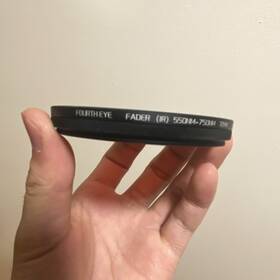
( Brand: Fourtheye ), ( Manufacturer Part Number: 550NM-750NM ), ( Part Type: Circular Camera Filter ), ( Filter Shape: Circular ), ( Filter Color: Red ), ( Filter Effects: Fader ), ( Mount Fitting: Threaded ), ( To Fit: Camera ), ( Filter Size: 72 Mm )
Review FOURTHEYE Fader Ir 72mm Red Circular Camera Lens Filter
The **FourEye 550nm 750nm Fader IR 72mm Camera Lens Filter** is a high-performance, fully adjustable infrared (IR) passband filter designed specifically for astrophotographers, wildlife and nature photographers, and scientific imaging enthusiasts who require precise control over infrared light while maintaining exceptional optical clarity. Engineered with a **spectral range of 550nm to 750nm**, this filter allows users to seamlessly transition between visible and near-infrared light, enabling them to capture stunning details in low-light conditions, enhance contrast in foliage and wildlife scenes, or isolate specific wavelengths for specialized applications. The **smooth, continuous fader mechanism** ensures effortless adjustment without the need for manual removal or reattachment, making it ideal for on-the-go photographers who demand flexibility and convenience. Constructed from **optically superior Schott B270 glass**, the filter delivers outstanding edge-to-edge sharpness, minimal chromatic aberration, and superior light transmission, ensuring that your images remain crisp and free from unwanted artifacts. Its **72mm thread** accommodates a wide range of camera lenses, from standard DSLRs to medium-format systems, while the **anti-reflective (AR) coating** minimizes flare and ghosting, further enhancing image quality in challenging lighting scenarios. Whether you're shooting through dense foliage to reveal hidden details, capturing the subtle glow of infrared reflections in wildlife, or conducting scientific imaging where wavelength isolation is critical, this filter provides the precision and versatility needed to elevate your photography to new heights. Built to withstand rigorous use, the FourEye IR filter is both durable and reliable, making it a valuable addition to any serious photographer s toolkit.
The **FourEyes 550nm 750nm Fader IR 72mm Camera Lens Filter** is a versatile infrared (IR) filter designed for astrophotography, particularly for capturing deep-sky objects like nebulae and galaxies. Below is a detailed breakdown of its pros and cons, followed by a conclusion and recommendation.
---
### **Pros**
1. **Wide IR Passband (550nm 750nm)**
- Covers a broad infrared spectrum, allowing more light from nebulae and galaxies to pass through compared to narrower filters. This is beneficial for capturing faint emissions that are often blocked by standard visible-light filters.
- Particularly useful for objects like the **North America Nebula (NGC 7000)**, **Pelican Nebula (IC 5070)**, and **Andromeda Galaxy (M31)**, which emit strongly in the near-IR range.
2. **Fader Design**
- The ability to adjust the IR transmission (from full block to full pass) is a significant advantage. This allows photographers to fine-tune the exposure for different objects or lighting conditions without switching filters.
- Useful for balancing IR and visible light in hybrid imaging (e.g., combining IR and visible data for enhanced contrast).
3. **High Optical Quality**
- FourEyes is known for producing high-quality optical glass, minimizing vignetting, ghosting, and chromatic aberration. The 72mm size is standard for many astrophotography setups, making it compatible with a wide range of cameras and telescopes.
- The filter is often made from **Schott or equivalent high-grade glass**, ensuring minimal light loss and distortion.
4. **Versatility for Different Imaging Techniques**
- Can be used in **monochrome (CMOS) astrophotography** to capture IR data, which can be combined with visible-light data for enhanced contrast (e.g., in narrowband or hybrid imaging).
- Works well with **DSLRs and dedicated astro cameras** (e.g., ZWO, QHY) that are sensitive to IR light.
- Some photographers use it in **landscapes or wildlife photography** where IR effects are desired, though this is less common in astrophotography.
5. **Durability and Build**
- Typically constructed with a **metal or reinforced plastic frame**, ensuring stability and longevity. The threaded design (72mm) allows for easy attachment to camera lenses or telescope focal reducers.
- Many FourEyes filters include **anti-reflective coatings** to reduce flare and ghosting.
6. **Cost-Effective Compared to Specialized Narrowband Filters**
- While not a narrowband filter (which blocks all but specific emission lines), it offers a cost-effective way to capture IR data without the expense of dedicated narrowband filters like the **Optolong L-Pro or Astronomik CLS**.
7. **Compatibility with Cooling**
- Since it doesn t block visible light like narrowband filters, it can be used with **cooled cameras** without significant performance loss, unlike some narrowband filters that require additional cooling for optimal results.
---
### **Cons**
1. **Not a True Narrowband Filter**
- Unlike filters like the **Astrodon IR Block** or **Optolong L-eXtreme**, this filter does not block all visible light, meaning it will still allow some unwanted light pollution and moonlight through.
- For **urban astrophotographers**, this can result in more light pollution contamination compared to narrowband filters, which block most visible light.
2. **Limited Use for Planetary Imaging**
- While it can be used for planetary imaging, it is **not ideal** for capturing Jupiter, Saturn, or Mars in high contrast. Planetary imagers typically prefer **visible-light filters** (e.g., IR-cut filters) to enhance planetary details.
- The IR passband may soften planetary features compared to standard visible-light imaging.
3. **Requires Post-Processing for Best Results**
- Since it captures both IR and some visible light, the resulting images may need **careful calibration and processing** (e.g., combining IR and visible data, using tools like **PixInsight or Photoshop**) to achieve the best results.
- Beginners may find the processing curve steeper compared to using a dedicated narrowband filter.
4. **Potential for IR Contamination in Visible-Light Imaging**
- If used with a camera that is sensitive to IR (e.g., many DSLRs), the filter may introduce **IR artifacts** (e.g., hot pixels, uneven exposure) that require additional processing to remove.
- Some astrophotographers prefer **IR-cut filters** (e.g., **Hutech IDAS or Astronomik IR-cut**) to block IR entirely for cleaner visible-light imaging.
5. **Size and Weight Considerations**
- The 72mm size is standard but may be **bulky** when combined with other filters (e.g., narrowband or IR-blocking filters). This can add weight to your imaging setup.
- If using a **focal reducer**, ensure the filter fits properly without causing vignetting.
6. **Not Ideal for All Nebulae**
- While it works well for **emission nebulae** (e.g., Orion, Lagoon), it may not provide a **dramatic contrast boost** for **reflection nebulae** (e.g., Pleiades), which are better captured with visible-light filters.
- Some **supernova remnants** (e.g., Veil Nebula) may require narrowband filters for optimal results.
7. **Learning Curve for IR Imaging**
- IR imaging requires an understanding of **IR-sensitive cameras** and **post-processing techniques** (e.g., combining IR and visible data, using **Hubble Palette** techniques). Beginners may find this challenging without prior experience.
---
### **Conclusion**
The **FourEyes 550nm 750nm Fader IR 72mm Filter** is a **high-quality, versatile tool** for astrophotographers looking to capture **IR-enhanced images of nebulae and galaxies**. Its **fader design** and **wide passband** make it stand out, especially for those who want flexibility in adjusting IR transmission. It is particularly well-suited for:
- **Deep-sky astrophotographers** working with **emission nebulae** (e.g., North America, Pelican, Andromeda).
- **Hybrid imagers** who combine IR and visible-light data for enhanced contrast.
- **Budget-conscious photographers** who want IR capabilities without the cost of narrowband filters.
However, it is **not ideal** for:- **Planetary imaging** (where visible-light filters are preferred).
- **Urban astrophotographers** who need strict light pollution rejection (narrowband filters are better).
- **Beginners** who are unfamiliar with IR imaging techniques or post-processing.
If your primary goal is **capturing IR-enhanced nebulae with flexibility**, this filter is an excellent choice. If you need **maximum light pollution rejection** or are focusing on **planetary imaging**, consider alternatives like **narrowband filters (e.g., Optolong L-eXtreme) or IR-cut filters (e.g., Hutech IDAS)**.
---
### **Recommendation**
**Buy the FourEyes 550nm 750nm Fader IR 72mm Filter if:**- You are an **astrophotographer** shooting **emission nebulae and galaxies** and want the ability to **adjust IR transmission**.
- You use a **monochrome camera** and are comfortable with **post-processing** to combine IR and visible data.
- You want a **cost-effective** alternative to dedicated narrowband filters while still capturing IR light.
- You plan to experiment with **hybrid imaging techniques** (e.g., IR visible for enhanced contrast).
**Avoid it if:**- You are a **beginner** and are unsure about IR imaging or post-processing.
- You primarily shoot **planetary images** or **reflection nebulae**.
- You are in a **light-polluted area** and need **maximum light pollution rejection** (opt for a narrowband filter instead).
- You prefer **all-in-one solutions** without the need for additional processing.
**Alternative Recommendations:**- For **narrowband imaging**: **Optolong L-eXtreme, Astronomik CLS, or IDAS NBZ**.
- For **planetary imaging**: **Hutech IDAS or Astronomik IR-cut filter**.
- For **budget-friendly IR**: **FourEyes IR 685nm or 720nm fixed filter** (if you don t need fader functionality).
Details:
Fourtheye Fader IR 550NM-750NM 72mm Red Circular Camera Lens Filter.
specifications filtecam:
- brand: Fourtheye
- mpn: 550nm-750nm
- part type: Circular Camera Filter
- filter shape: Circular
- filter color: Red
- filter effects: Fader
- mount fitting: Threaded
- to fit: Camera
- filter size: 72 Mm
general filtecam:
- Cameras Photo > Lenses Filters > Filters
- condition: Used
payments filtecam:
- credit card: Mastercard
- other
- money order
- wallet: Paypal
offer filtecam:
- options: Ship-to-home
- sold: 0
- availability: In Stock
- started: February 12, 2026
- quantity: 1
- best offers: True
seller filtecam:
- # reviews: 98
- city: Hudsonville, Michigan
- rating: 100.0%
shipping filtecam:
- class: Standard
- cost: $5.45
- type: Calculated
- carrier: USPS
- transit: 5-11 Days
- service: USPS Ground Advantage
returns filtecam:
- policy: No Returns