SCHNEIDER 68-111444 Coral Edge Graduated Glass Filter Step Graduation
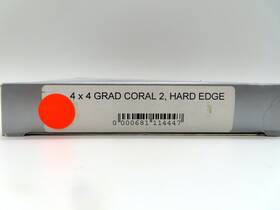
( Brand: Schneider ), ( Manufacturer Part Number: 68-111444 ), ( Part Type: Glass Step Filter ), ( Non-domestic Product: No ), ( Square/rectangular Size: 4x4 In )
Review SCHNEIDER Inch Coral Hard edge Graduated Glass Filter step Graduation
The **Schneider 68-111444 Coral Hard-Edge Graduated Glass Filter** is a precision-engineered optical accessory designed to elevate the quality of photographic and cinematographic imaging by delivering seamless, high-contrast transitions between clear and colored zones. Crafted from high-quality optical glass, this filter features a **hard-edge graduation**, meaning the transition from the uncolored base to the vibrant coral hue is sharp and well-defined, eliminating any soft or blended gradients that could detract from the image s clarity. The coral tint, a rich and warm shade of orange-red, is ideal for enhancing the mood and depth of landscapes, portraits, and architectural photography, particularly in low-light conditions or when shooting through atmospheric haze. This filter excels in scenarios where a subtle yet impactful color correction is desired, such as when balancing blue tones in overcast skies or adding a cinematic warmth to scenes captured during golden hour. The **hard-step graduation** ensures that the filter s effect is consistent and predictable, allowing photographers and videographers to achieve professional-grade results without unintended color bleed or distortion. Whether used in still photography or filmmaking, the Schneider 68-111444 is a versatile tool that enhances the visual storytelling capabilities of any lens, making it a valuable addition to any serious creative s kit. Its durable construction and optical precision ensure long-term reliability, while its compatibility with Schneider s extensive line of filters and lens systems guarantees seamless integration into existing workflows.
The **Schneider 68-111444 Coral Hard-Edge Graduated Glass Filter** is a high-end graduated neutral density (ND) filter designed for professional photography, particularly in landscape and architectural work. Below is a detailed breakdown of its pros and cons, followed by a conclusion and recommendation.
---
### **Pros**
1. **Superior Optical Quality**
Schneider is renowned for its precision-engineered glass, and this filter delivers exceptional clarity and minimal distortion. The hard-edge graduation ensures a sharp transition between the graduated and clear portions, which is ideal for landscapes where you want to balance exposure between bright skies and darker foregrounds.
2. **Hard-Edge Graduation**
Unlike soft-edge filters, which blend gradually, this filter has a crisp, abrupt transition. This is beneficial when you need a precise cutoff point, such as when photographing a horizon where you want the sky to remain fully exposed while the foreground stays darker. The hard-edge design also reduces the risk of unintended light leaks or uneven exposure.
3. **High-Quality Construction**
The filter is built with durable materials, including a robust metal frame and high-index glass, which minimizes reflections and flare. This makes it suitable for bright, backlit conditions where controlling stray light is critical.
4. **Neutral Density (ND) Properties**
The filter is a graduated ND, meaning it reduces light intensity uniformly across the graduated portion without altering color balance. This is particularly useful for long exposures in bright conditions, such as waterfalls or cityscapes, where you need to slow down your shutter speed without affecting the natural color of the scene.
5. **Compatibility with Professional Systems**
Schneider filters are designed to work seamlessly with other high-end lenses and filter systems, such as those from Canon, Nikon, Sony, and others. The filter s threading is precise, ensuring a snug fit without vignetting.
6. **Durability and Longevity**
Schneider filters are known for their longevity. The glass is coated to resist scratches and smudges, and the build quality ensures it can withstand frequent use in demanding environments.
7. **Versatility**
The coral (amber) tint can be useful in certain conditions, such as low-light scenarios or when you want to enhance the warmth of the sky. However, it s important to note that this is not a primary ND filter but a graduated one, so its tint is subtle compared to dedicated color filters.
---
### **Cons**
1. **High Cost**
Schneider filters are premium products, and this specific filter is no exception. The price point is significantly higher than that of mid-range or budget filters from brands like B W, Hoya, or K&F Concept. For hobbyists or casual photographers, this may not be justified unless you re working in professional settings where image quality is paramount.
2. **Overkill for Some Use Cases**
If you primarily shoot in controlled environments or don t frequently deal with extreme exposure contrasts (e.g., bright skies over dark landscapes), a graduated ND filter may not be necessary. In such cases, a simpler graduated filter or even post-processing adjustments might suffice.
3. **Weight and Bulk**
Schneider filters are heavier and bulkier than plastic or resin-based filters. This can be cumbersome if you re carrying a large filter kit, especially in field photography where weight matters.
4. **Limited Color Correction**
While the filter is neutral, the subtle coral tint may not be ideal for all scenarios. If you re shooting in conditions where color accuracy is critical (e.g., product photography or studio work), you might need to rely on post-processing to correct any unintended color shifts.
5. **Maintenance Requirements**
High-quality glass filters require careful handling to avoid scratches or smudges. They also need to be cleaned regularly with proper tools, which can be an inconvenience compared to plastic filters that are more forgiving.
6. **Potential for Overuse**
Some photographers prefer to avoid filters altogether and instead use bracketing or HDR techniques to achieve similar effects. While this filter is excellent for its purpose, it may not be necessary if you re comfortable with alternative workflows.
---
### **Conclusion**
The **Schneider 68-111444 Coral Hard-Edge Graduated Glass Filter** is a superior tool for professional photographers who demand the highest optical quality and precision in their work. Its hard-edge graduation, neutral density properties, and durable construction make it ideal for landscapes, architecture, and other genres where exposure balancing is critical. However, its high cost, weight, and specialized use case mean it may not be practical for everyone.
For photographers who frequently shoot in conditions requiring precise graduated ND control such as bright skies over dark foregrounds or long exposures in daylight this filter is an excellent investment. On the other hand, those on a budget, shooting in controlled environments, or preferring post-processing solutions might find it unnecessary.
---
### **Recommendation**
- **Buy it if:**- You are a professional or serious enthusiast who prioritizes image quality and precision.
- You frequently shoot landscapes, seascapes, or architecture where graduated ND filters are essential.
- You already own Schneider lenses or filters and want to maintain consistency in your gear.
- You re willing to invest in high-end tools that will last for years.
- **Skip it if:**- You re a hobbyist or casual photographer who doesn t frequently use graduated filters.
- You prefer post-processing over in-camera solutions.
- You re working with a limited budget and can achieve similar results with more affordable alternatives.
- You primarily shoot in low-contrast or controlled lighting conditions where filters aren t necessary.
For those who decide to invest, consider pairing it with a high-quality lens hood to minimize flare and ensure the filter s performance is maximized. Additionally, always handle it with care to preserve its optical quality.
Details:
Buyer pays $9.99 s/h. With graduated filters, often it is necessary or desirable to balance the light intensity in one part of a scene with another. Used primarily to add color part of a scene where may be weak or absent, Schneider Graduated Color filters can also used for effects which contribute the cinematic drama. They are available in an array of colors.
SCHNEIDER 4x4 CORAL 2 - HARD EDGE, Filter is brand new in a box with pouch. Different strengths of Schneider Coral filters can be used during filming to achieve the same degree apparent warmth under different light conditions. This is especially true in situations where you don't have total light control, as bright contrast landscapes. Schneider Coral filters can be used to under-correct a scene in order create an excessively blue look for added drama, and also as warming other dramatic effects.
The Soft or Hard label indicates the degree of color graduation. Schneider Graduated Color filters are part clear and color. This makes them particularly useful for maintaining a consistent color balance throughout an entire day of shooting, or to create sunset dawn effect during. List is $299. The Schneider Graduated Coral 2 Glass Filter considered to be both a color-correction and color-effects filter.
Cinematographers who own a complete set of Schneider Coral filters have the ability to control just about any outdoor lighting situation.
part #: 68111444 prices
- $150.00-$250.00
specifications filtecam:
- brand: Schneider
- mpn: 68-111444
- part type: Glass Step Filter
- non-domestic product: No
- square/rectangular size: 4x4 In
seller filtecam:
- # reviews: 18916
- city: Chatsworth, California
- rating: 99.9%
offer filtecam:
- availability: In Stock
- options: Ship-to-home
- started: April 15, 2026
- sold: 0
- quantity: 6
general filtecam:
- Cameras Photo > Lenses Filters > Filters
- condition: New
shipping filtecam:
- cost: $9.99
- transit: 4-8 Days
- service: Standard
- type: Fixed
- class: Standard
returns filtecam:
- time: 14 Days
- paid by: Buyer
- policy: Returns Accepted
- method: Money back
payments filtecam:
- credit card: Visa
- other
- wallet: Apple-pay
Schneider 68-111444 Is Similar To:
- 10412e Schneider Kreuznach 82mm Center Filter Iv Multicoating With Case (41.7% similar) Fully tested and works properly. 6 months warranty included. Warranty does not cover misuse. Liquid, sand, impact damage, etc. Condition excellent. Includes only what is pictured...(September 21st, 2016)
- 1070989 Filter Schneider Kreuznach Slr Dslr Digital (28% similar) Thanks, and good luck. What I have up for offer is a brand new genuine Schneider crunch b w 39MM filter. This is a b w 39E 39MM 39MM Marc UV-pass 403 filter...(August 11th, 2018)
- 11788 Filter Schneider Kreuznach Slr Dslr Digital (28.4% similar) What I have up for offer is a brand new genuine Schneider crunch b w 67MM filter. This is a b w 67E 67MM 67MM UV-pass 403 filter. Please inquire before buying...(July 9th, 2018)
- 14689 Mrc Cut Filter Schneider Kreuznach Slr Dslr Digital (26.8% similar) Please inquire before buying. What I have up for offer is a brand new genuine Schneider crunch b w 55MM filter. Thanks, and good luck. This is a b w 55E 55MM 55MM Marc UV-Ir cut 486 filter...(August 11th, 2018)
- 4012240008155 Schneider Genuine Digital Mrc Nano Xsp Filter (35.8% similar) Because of all this time-wasting smoke-screen deception now practice caveat vendor look it up you should know that any serial are recorded to prevent buyer tampering or replacement. B w 86MM XS-pro UV haze Marc-nano 010M filter I purchased this new from photo about 6 mos ago after acquired my sigma ...(November 12th, 2018)
- 4012240009008 Schneider Nd Coated Filter (36.4% similar) 8 coated neutral density filter. Like new, lightly used...(May 12th, 2018)
- 44bpm2 Tiffen Black Glass Filter Promist Schneider Frost 049383078657 (32.3% similar) This filter measures 4 x as always, do the pros. The 2 density provides less contrast and highlight reduction than 3 but more 1, while also allowing for a soft, pastel-like quality of light. Pro-mist - most popular motion picture effect. UPC: 57 filter format: larger format color: BPM2 product ...(March 9th, 2018)
- 52pm1 Tiffen Glass Filter Schneider Frost (30.1% similar) Great for portraits and focus often used to mute colors exquisite pastel tones stiffen optical filters are manufactured using color core technology, a closely guarded proprietary process that entails permanently laminating the filter material in between two pieces of glass ground flat tolerances ...(September 3rd, 2018)
- 605228055902 Schneider New Optics Filter (31.8% similar) A coral graduated filter can be used to color balance portion of the scene, leaving uncorrected therefore cold or blue. Schneider's SE2 a graduated color filter is used with wide to medium-angle lenses because these lenses have greater depth of field. As a color-effects filter, coral graduated ...(June 6th, 2017)
- 605228055940 Schneider New Optics Filter (31.8% similar) As a color-effects filter, coral graduated filter can be used to warm landscape or enhance an evening sky. A coral graduated filter can be used to color balance portion of the scene, leaving uncorrected therefore cold or blue. Schneider's SE3 a graduated color filter is used with wide to medium-...(June 6th, 2017)
- 65-014687 Schneider New Cut Mrc Filter Made In Germany Mm (34.9% similar) Brass ring for higher quality image highest possible polishing technique worlds best optical glass new thinner pro mount...(September 11th, 2018)