OPTIMA B390 Glass Camera Lens Filter Uv Bandpass Optical 48MM
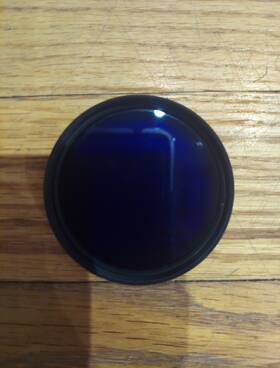
( Brand: Optima ), ( Manufacturer Part Number: B390 ), ( Part Type: Glass Camera Filter ), ( Filter Shape: Circular ), ( Filter Color: Blue ), ( Filter Effects: Blue, Uv Pass, Bandpass ), ( Mount Fitting: Threaded ), ( To Fit: Camcorder, Camera, Digital Camera ), ( Country Of Origin: Japan ), ( Filter Size: 48 Mm )
Review OPTIMA 48mm Blue Glass Camera Lens Filter Uv Pass Bandpass Optical Japan
The **Optima B390 48mm UV Bandpass Optical Filter** is a precision-engineered accessory designed for photographers and astrophotographers seeking to enhance clarity, reduce atmospheric interference, and capture the cosmos with unparalleled detail. Crafted from high-quality optical glass, this filter operates at a narrowband wavelength of approximately 390 nanometers, effectively blocking the majority of visible light while allowing only a specific ultraviolet spectrum to pass through. This selective transmission is ideal for applications where natural UV light often obscured by atmospheric haze, pollution, or artificial illumination needs to be isolated for scientific, artistic, or documentary purposes. The filter s 48mm diameter ensures compatibility with a wide range of DSLR, mirrorless, and astrophotography lenses, making it a versatile tool for both terrestrial and celestial imaging. Its durable, multi-coated optical surface minimizes reflections and chromatic aberrations, ensuring sharp, distortion-free results even at high magnifications. Whether used in conjunction with specialized UV-sensitive cameras, modified DSLRs, or as part of a multi-filter setup for astronomical imaging, the Optima B390 excels in isolating subtle UV details that are invisible to the naked eye. Built to withstand rigorous use, this filter is housed in a robust metal frame with a precise thread alignment, guaranteeing a secure and vibration-free attachment to your lens. For photographers exploring the boundaries of light and color, the Optima B390 is not merely a filter it is a gateway to capturing the invisible spectrum with precision and artistic intent.
The **Optima B390 48mm UV Bandpass Filter** is a specialized optical filter designed primarily for astrophotography, particularly for capturing narrowband images of nebulae and other celestial objects. Below is a detailed breakdown of its pros and cons, followed by a conclusion and recommendation.
---
### **Pros**
1. **High-Quality Optical Performance**
The B390 series from Optima is known for its precision-engineered glass and multi-layer coatings, which minimize chromatic aberration and maximize light transmission. This ensures sharp, high-contrast images with minimal distortion.
2. **Narrowband Filtering for Astrophotography**
As a UV bandpass filter, it isolates specific wavelengths of light (typically around 486 nm, corresponding to the Hydrogen Beta line) while blocking all other wavelengths. This is ideal for capturing detailed images of nebulae, galaxies, and other celestial objects with minimal light pollution interference.
3. **Durable Construction**
Optima filters are built with high-quality materials, including screw-in metal rings and durable coatings. The B390 is designed to withstand frequent use without degradation, making it a long-term investment for serious astrophotographers.
4. **Compatibility with DSLR and Mirrorless Cameras**
The 48mm size is a standard thread, making it compatible with most DSLR and mirrorless cameras, as well as many telescope adapters. This versatility allows it to be used with a wide range of imaging setups.
5. **Reduces Atmospheric Interference**
By blocking unwanted UV light and other non-target wavelengths, the filter helps improve the signal-to-noise ratio in images, leading to cleaner, more detailed astrophotographs.
6. **Minimal Vignetting**
Optima filters are designed to minimize edge darkening (vignetting), ensuring even illumination across the entire frame of your sensor.
7. **Easy to Use**
The screw-in design is straightforward to attach and remove, and the filter s compact size makes it convenient for portable setups.
---
### **Cons**
1. **Limited Use Beyond Astrophotography**
Unlike broad-spectrum filters (e.g., UV or infrared cut filters), the B390 is highly specialized. It is primarily useful for capturing specific nebular emissions and is not suitable for general photography, landscape work, or daytime use. This narrow application may limit its practicality for photographers who shoot a variety of subjects.
2. **Requires Additional Filters for Full Nebula Capture**
The Hydrogen Beta line (486 nm) is just one of several emission lines in nebulae (e.g., Hydrogen Alpha at 656 nm, Oxygen III at 496/501 nm). To capture the full spectrum of a nebula, you would need multiple narrowband filters (e.g., Optima B685 for Hydrogen Alpha) or a dedicated narrowband camera. This adds cost and complexity to your setup.
3. **Potential for Over-exposure**
Narrowband filters can amplify the signal of the target emission lines, which may lead to over-exposure if not properly balanced with exposure times. This requires careful testing and adjustment to avoid blown highlights or loss of detail.
4. **Cost Relative to Broad-Spectrum Filters**
While the B390 is reasonably priced for an Optima filter, it is more expensive than basic UV or infrared cut filters. If you re not specifically targeting Hydrogen Beta emissions, the cost may not justify the purchase.
5. **Requires a Stable Mounting System**
Astrophotography often involves long exposure times, and any vibration or misalignment can degrade image quality. The filter must be securely attached to avoid shifting during exposure, which may require additional mounting hardware.
6. **Limited Use in Light Pollution Conditions**
While the filter blocks most light pollution, it does not eliminate it entirely. In areas with severe light pollution, additional narrowband filters or specialized cameras (e.g., dual-band or tri-band) may be necessary for optimal results.
7. **Learning Curve for Astrophotography**
Using narrowband filters effectively requires an understanding of astrophotography techniques, including focus, tracking, and post-processing. Beginners may find the process challenging without prior experience.
---
### **Conclusion**
The **Optima B390 48mm UV Bandpass Filter** is an excellent choice for astrophotographers specifically targeting the Hydrogen Beta emission line in nebulae. Its high optical quality, durability, and specialized filtering make it a valuable tool for capturing detailed celestial images. However, its narrow application and the need for complementary filters or equipment may limit its appeal to casual photographers or those not deeply invested in astrophotography.
If your primary goal is to capture the Hydrogen Beta line in nebulae and you already have a compatible astrophotography setup, this filter is a worthwhile investment. For general photography or those exploring astrophotography for the first time, a broader-spectrum filter (e.g., a UV cut filter) or a more versatile narrowband setup may be more practical.
---
### **Recommendation**
- **Buy the Optima B390 if:**- You are an astrophotographer focusing on capturing Hydrogen Beta emissions in nebulae.
- You already own or plan to invest in a narrowband imaging setup (e.g., a Hydrogen Alpha filter or a dedicated narrowband camera).
- You prioritize optical quality and durability for long-term use.
- You are comfortable with the technical challenges of astrophotography, including exposure calibration and post-processing.
- **Avoid the Optima B390 if:**- You are not specifically targeting Hydrogen Beta emissions and would benefit more from a broad-spectrum filter.
- You are a beginner in astrophotography and need a more versatile or cost-effective solution.
- You primarily shoot landscapes, portraits, or other non-astronomical subjects.
- You do not have a stable, tracked astrophotography setup to pair with the filter.
For those looking to explore astrophotography further, consider pairing the B390 with other narrowband filters (e.g., Optima B685 for Hydrogen Alpha) to capture a broader range of nebular emissions. Alternatively, investing in a dual-band or tri-band narrowband camera may provide a more comprehensive solution for capturing nebulae in one go.
Details:
specifications filtecam:
- brand: Optima
- mpn: B390
- part type: Glass Camera Filter
- filter shape: Circular
- filter color: Blue
- filter effects: Blue, Uv Pass, Bandpass
- mount fitting: Threaded
- to fit: Camcorder, Camera, Digital Camera
- country of origin: Japan
- filter size: 48 Mm
shipping filtecam:
- class: Standard
- type: Fixed
- carrier: USPS
- cost: $5.99
- service: USPS Ground Advantage
- transit: 3-8 Days
offer filtecam:
- sold: 0
- options: Ship-to-home
- availability: In Stock
- quantity: 1
- started: March 3, 2026
payments filtecam:
- wallet: Google-pay
- other
- credit card: Mastercard
general filtecam:
- condition: Used
- Cameras Photo > Lenses Filters > Filters
seller filtecam:
- # reviews: 1266
- city: East Setauket, New York
- rating: 99.7%
returns filtecam:
- method: Money back
- paid by: Buyer
- policy: Returns Accepted
- time: 30 Days