JJC F-LQ3 Uv Filter Leica Digital Ultra 950291527370 43/ Q3/ Q2
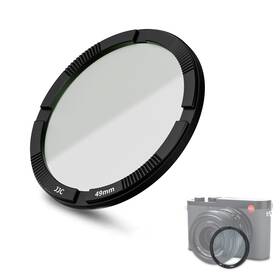
( Brand: Jjc ), ( Manufacturer Part Number: F-LQ3 ), ( Part Type: Filter ), ( Photo Filter Effect Type: Ultraviolet ), ( Photo Filter Thread Size: 49.0 ), ( Coating Description: Multi Coating ), ( Display Size: 3.7 ), ( Material: Optical Glass ), ( UPC: 950291527370 ), ( Package Dimensions Lxwxh: 4.53x4.21x0.79 Inches ), ( Weight: 0.22 Pounds )
Review JJC Uv Filter Leica Q3 43/ Q3/ Q2 Digital Ultra Slim Protection
The **JJC F-LQ3 UV Filter** is a meticulously engineered, high-quality optical accessory designed exclusively for Leica s flagship Q3 43, Q3, and Q2 digital ultra-compact cameras, ensuring pristine image integrity and unparalleled protection for your investment. Crafted from premium **UV-cutting glass** with a **multi-layer anti-reflective (AR) coating**, this filter eliminates harmful ultraviolet and infrared light while minimizing flare, ghosting, and lens aberrations, resulting in sharper, more accurate colors and enhanced contrast in every photograph. Its **ultra-thin profile** just **3mm in thickness** ensures minimal vignetting and maintains the camera s compact form factor, making it ideal for travel, street photography, and professional portraiture where space and performance are paramount. The **precision-machined aluminum frame** is both durable and lightweight, featuring a **Leica-compatible bayonet mount** that guarantees a secure, dust-free fit, while the **low-profile design** prevents interference with the camera s built-in lens or autofocus mechanisms. Whether you re capturing architectural details, macro subjects, or dynamic landscapes, the JJC F-LQ3 acts as a silent guardian, preserving the integrity of your Leica s optical system while extending its lifespan. For photographers who demand excellence without compromise, this filter is the perfect blend of innovation and craftsmanship, ensuring that every frame you capture is as flawless as the camera itself.
### **Pros and Cons of the JJC F-LQ3 UV Filter for Leica Q3/Q2/Q2 Digital Ultra**
#### **Pros**
1. **UV Protection** The filter blocks harmful ultraviolet rays, which can degrade image quality over time by causing lens flare, haze, or even permanent damage to the lens coating. This is particularly useful for outdoor photography in bright sunlight.
2. **Scratch and Abrasion Resistance** High-quality UV filters are made from hardened glass or resin, which provides an extra layer of protection against scratches and dust compared to an unprotected lens.
3. **Convenience for Outdoor Shooting** Since the Q-series lenses are fixed (no removable lens hood), a UV filter can act as a makeshift lens hood in some cases, reducing stray light and improving contrast in bright conditions.
4. **Compatibility with Existing Accessories** The filter fits directly onto the lens, allowing you to use existing lens caps, lens cleaning tools, and other accessories without modification.
5. **Cost-Effective Alternative to Lens Hoods** While not a perfect substitute for a proper lens hood, a UV filter can help mitigate some lens flare issues, especially when shooting into the sun.
6. **No Focal Length Limitations** Unlike some polarizing or graduated filters, a UV filter does not affect sharpness or color accuracy across the entire frame.
7. **Easy to Remove When Not Needed** Since the Q-series lenses are fixed, a UV filter can be removed when not required, such as in controlled studio environments where UV protection is unnecessary.
---
#### **Cons**
1. **Minimal Practical Benefit for Digital Photography** Modern digital sensors are less sensitive to UV light than film was, meaning the protective benefit is often negligible. Many photographers argue that a UV filter is more of a mythical "protection" than a real necessity for digital cameras.
2. **Potential for Image Quality Degradation** Some UV filters introduce slight softness or vignetting, though high-quality filters like the JJC F-LQ3 are designed to minimize this. However, the Q-series lenses are already known for their sharpness, so any additional diffusion could be noticeable.
3. **Additional Cost and Bulk** The Q-series lenses are already premium, and adding a filter increases both the upfront cost and the physical size of the setup, which may not be ideal for minimalist photographers.
4. **Not a True Lens Hood** While it may help slightly with flare, a UV filter cannot replace a proper lens hood, which is more effective at blocking stray light. The Q2/Q3 lenses do not have a bayonet mount for a hood, so this is a limitation.
5. **Potential for Reflection and Ghosting** Some filters, especially cheaper ones, can introduce internal reflections or ghosting in high-contrast scenes. The JJC is well-regarded, but no filter is entirely free of this issue.
6. **Maintenance Requirement** An extra filter means one more surface to clean, increasing the risk of smudges or dust on the lens if not handled carefully.
7. **Overkill for Indoor or Controlled Environments** In studio or low-light conditions, a UV filter provides no benefit and may even slightly reduce light transmission.
---
### **Conclusion**
The **JJC F-LQ3 UV Filter** is a practical choice for Leica Q3/Q2/Q2 Digital Ultra users who prioritize **physical lens protection** and **minimal flare reduction** in outdoor conditions. While the UV protection benefit is somewhat overstated for modern digital sensors, the filter does provide an extra layer of durability and convenience.
However, if **image quality and sharpness** are the top priorities, the marginal benefits may not justify the cost and potential softness. For photographers who frequently shoot in harsh outdoor conditions or want an extra precaution against accidental scratches, the filter is a reasonable addition. For those who prioritize absolute sharpness and minimal optical interference, it may be unnecessary.
### **Recommendation**
- **Buy the JJC F-LQ3 UV Filter if:**- You frequently shoot in bright outdoor conditions where stray light is an issue.
- You want an extra layer of protection against scratches or dust.
- You prefer the convenience of a filter over a lens hood (even if it s not a perfect substitute).
- You already use filters and want consistency with your workflow.
- **Skip the UV Filter if:**- You shoot primarily in controlled environments (studio, low light).
- You prioritize absolute sharpness and are concerned about any potential softness.
- You prefer a minimalist setup and see the filter as an unnecessary expense.
- You already use a lens hood (though the Q-series lacks a proper hood mount).
**Final Verdict:** The JJC F-LQ3 is a **low-risk, low-reward** accessory it won t hurt your images, but it may not significantly improve them either. If you decide to get one, ensure it s a high-quality filter (like the JJC) to minimize any potential drawbacks. For most Q-series users, it s a **nice-to-have rather than a must-have**.
Details:
The thickness of the filter frame is only 3.7mm, it does not cause vignetting. F-LQ3 L39 Ultra Slim Multi-Coated UV Filter is specially designed for LEI. It solves the problem where standard UV filters cannot be used for macro photography when a lens hood is attached. This filter adopts an ultra-slim embedded design, which does not affect macro shooting and interfere with the use of original lens cap or hood.
Each side of the glass features 19 layers coating, effectively reducing ghosting and reflections, making image clearer. The filter frame is made of premium aluminum alloy, which sturdy and durable. It does not affect macro shooting and interfere with the use of original lens cap or hood. Note its recommended to take off the filter using with removal tool.
The filter is scratch-resistant, anti-static, water-repellent, and oil-resistant. Q3 43 and cameras. UV Protection The filter blocks light and reduces the bluish cast of daylight that can affect color accuracy, especially at higher altitudes. Multi-Coated Optical Glass Multiple layer coatings prevent internal ghosting and reflections, while make the filter anti-scratch, anti-static, oil water-resistant.
specifications filtecam:
- brand: Jjc
- mpn: F-lq3
- part type: Filter
- photo filter effect type: Ultraviolet
- photo filter thread size: 49.0
- coating description: Multi Coating
- display size: 3.7
- material: Optical Glass
- upc: 950291527370
- package dimensions lxwxh: 4.53x4.21x0.79 Inches
- weight: 0.22 Pounds
returns filtecam:
- paid by: Seller
- time: 30 Days
- policy: Returns Accepted
- method: Money back
offer filtecam:
- sold: 0
- started: March 18, 2026
- availability: In Stock
- options: Ship-to-home
- quantity: 1
shipping filtecam:
- cost: $0.00
- class: Expedited
- type: Fixed
- transit: 3-8 Days
- service: Expedited
seller filtecam:
- city: Saint Joseph, Louisiana
- rating: 98.9%
- # reviews: 515
general filtecam:
- Cameras Photo > Lenses Filters > Filters
- condition: New
payments filtecam:
- credit card: Mastercard
- other
- wallet: Apple-pay
Jjc F-LQ3 Is Similar To:
- F-cpl Jjc Slim Circular Polarizer Cpl Digital Optical Glass Filter Us (30.6% similar) ...(October 5th, 2018)
- F-mcuv Jjc Mcuv Ultrathin Slim Multicoated Uv Ultraviolet Absorb Light Filter (19.7% similar) 5MMGLASS type: Japanese . Item specifics brand: Jjc filter effects: microchip: circulate fit: camera and camcorder transmission rate: 99...(July 31st, 2018)
- F-mcuv82 Jjc Mcuv Ultra Thin Slim Multi Coated Uv Ultraviolet Absorb (28% similar) Item specifics brand: Jjc filter effects: microchip: circulate fit: camera and camcorder transmission rate: 99...(February 18th, 2019)
- F-ndv52 Jjc Variable Neutral Density Filters To For Lens Us (32.8% similar) ...(October 5th, 2018)
- Wb-f1 Jjc Wb White Balance Filter (22.2% similar) I am not here to cheat any one or takes hard earned money example Walmart, Kmart, sears, etc. If this is the case and you still want item. If you cannot be patient please refrain from buying anything. Keep this in mind. Buyers remorse is not applicable return period. Please notify me, I can work ...(November 1st, 2018)
- Jjc Nd2-2000 Nd2-nd2000 82mm Variable Neutral Density Filter (19.3% similar) The filter shows some signs of wear on the metallic finish, but glass is otherwise clean and free any scratches or blemishes. The filter threads are clean and screw onto compatible lens fronts with ease. Used Jjc ND2-ND2000 82MM variable neutral density filter in good overall condition...(October 11th, 2024)
- Jjc F-wmcuvg3 Uv Protective Filter For Ricoh Gr Iiix Hdf Gr3x Iii Hd (36.4% similar) 99.5% transmission slim design the filter is constructed high quality optical glass and offers a light transmission rate. It features a 1.8MM ultra slim aluminum-alloy frame to prevent vignetting. Remove the filter with included removal tool. Peel off the sticker on back of filter, filter to your ...(January 4th, 2025)
- Jjc F-nd2k46 40.5mm Nd2-nd2000 Nd Filter Variable Neutral Density For Camera Lens (32.1% similar) Jjc 40.5MM ND2-ND2000 nd filter variable neutral density for camera lens...(January 15th, 2025)
- Jjc F-nd2k58 58mm Nd2-nd2000 Nd Filter Variable Neutral Density For Camera Lens (32.5% similar) Capture stunning images with the Jjc 58MM ND2-ND2000 variable neutral density filter, an essential accessory for any photography enthusiast. The circular filter shape ensures compatibility with most lenses, while its variable neutral density effect allows for a versatile shooting experience, from ...(January 20th, 2025)
- Jjc 940202314618 40.5mm Nd Filter Nd2-2000 Vnd Variable Neutral Density Adjustable Fader For S (22.5% similar) The heavier the density, slower your shutter speed will be, when using this variable nd filter at high values 9 f-stop or above on wide angle lenses, it would appear x cross mark, vignetting, reflections blur in picture, is unavoidable according to structure and operating principle of. Darkens ...(January 30th, 2025)
- Jjc 950291510778 Filter Kit For Osmo Pocket 3 Includes Ndv2-32 64-1000 Cpl Black Mist 1 4 (28% similar) Jjc filter kit for ism pocket 3, includes NDV2-32 64-1000 cpl black mist 1/4. Shipped with USPS ground advantage...(February 4th, 2025)