HAIDA HD4599-105 Nanopro Filter Infrared 972288552707 105MM IR720 720NM 720HB
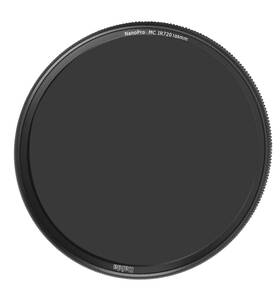
( Brand: Haida ), ( Manufacturer Part Number: HD4599-105 ), ( Part Type: Filter ), ( UPC: 972288552707 )
Review HAIDA Nanopro 105mm Mc Filter Infrared 720nm
The **Haida HD4599-105 Nanopro 105mm IR720 Filter** is a high-performance, precision-engineered optical filter designed specifically for astronomers, wildlife photographers, and infrared imaging enthusiasts seeking to capture the subtle yet fascinating details of the near-infrared spectrum. Engineered with Haida s proprietary **Nanopro coating technology**, this filter delivers exceptional contrast, clarity, and color fidelity while effectively blocking unwanted visible light wavelengths, allowing only the near-infrared band at **720nm** to pass through with minimal loss. The **720nm cutoff** is particularly well-suited for applications where subtle infrared details such as plant health, wildlife camouflage, or astronomical objects must be isolated without the interference of visible light pollution or atmospheric scattering. Constructed from **high-quality optical glass** with a **105mm diameter**, this filter ensures broad compatibility with a wide range of telescopes, DSLRs, and mirrorless cameras, making it a versatile choice for both astrophotography and terrestrial infrared imaging.
What sets the **Nanopro 720 filter** apart is its **ultra-thin, multi-layer dielectric coating**, which minimizes reflections, ghosting, and chromatic aberration while maintaining near-perfect transmission efficiency at the target wavelength. This advanced coating also enhances durability, ensuring long-term performance even under demanding conditions, such as high humidity or frequent use in field photography. The filter s **precision-machined edges** and **anti-reflective coating** on both surfaces further reduce stray light, allowing for sharper, more detailed images with reduced flare. Whether used in **astronomical imaging** to capture faint infrared emissions from nebulae or in **wildlife and botanical photography** to reveal hidden details in foliage and animal fur, this filter provides a clear, unobstructed view of the infrared world while maintaining the integrity of the captured data.
For those exploring the boundaries of infrared imaging, the **HD4599-105** offers an ideal balance between accessibility and performance. Its **105mm size** accommodates most modern camera mounts, including those used with DSLRs, mirrorless systems, and dedicated astrophotography rigs, while its **compact thickness** ensures minimal vignetting or obstruction of the optical path. Additionally, Haida s commitment to **rigorous quality control** means each filter undergoes strict testing for optical clarity, wavelength accuracy, and structural integrity, guaranteeing consistent results across every unit. Whether you're a seasoned astrophotographer refining your infrared imaging workflow or a nature photographer experimenting with new perspectives, the **Haida Nanopro IR720 Filter** is a reliable, high-precision tool that unlocks the hidden beauty of the near-infrared spectrum with unmatched precision and clarity.
### **Pros and Cons of the Haida HD4599-105 Nanopro 105mm IR720 Filter (720nm, 720HB)**
#### **Pros:**1. **High Optical Quality** Haida is a well-known brand in the optics industry, known for producing high-quality filters with excellent edge quality and minimal ghosting or flare. The Nanopro series is particularly praised for its precision-machined edges, which reduce reflections and improve image clarity.
2. **Narrowband IR Passband (720nm)** The 720nm cutoff is ideal for astrophotography, particularly for capturing the **Hydrogen Beta (H ) emission line (486.1nm)** and other narrowband targets like **OIII (500.7nm)** when used with a compatible IR-blocking filter. It allows more light through than a standard IR-cut filter while blocking most visible light pollution.
3. **Low Reflection Coating** The filter is designed with anti-reflective coatings to minimize ghosting and internal reflections, which is crucial for deep-sky imaging where contrast is key.
4. **Durable Construction** Made from **optical-grade Schott glass**, the filter is resistant to scratches and warping, ensuring long-term use. The cell thickness is optimized for minimal vignetting.
5. **Compatibility with Modern Cameras** Works well with **monochrome cameras** (especially those with IR sensitivity) and some color cameras (though color cameras may require additional IR-cut filters for proper color balance).
6. **Good for Narrowband Imaging** When paired with a **720nm blocking filter** (like the Haida 720HB), it allows the capture of **H and OIII** while suppressing most light pollution. This is useful for nebulae like the **North America Nebula (NGC 7000)** or **Pelican Nebula (IC 5070)**.
7. **Affordable for a High-Quality Filter** Compared to some premium brands, Haida offers strong performance at a reasonable price, making it a cost-effective choice for serious astrophotographers.
---
#### **Cons:**1. **Requires Additional Filtering for Full Color Imaging** If you're using a **color camera**, the 720nm passband will still allow some infrared light through, which can cause **IR blooming** (false color artifacts) unless you use an **additional IR-cut filter** (like a 685nm or 742nm blocking filter).
2. **Not Ideal for Wide-Field Visible Imaging** Unlike a standard **IR-cut filter (e.g., 742nm)**, this filter does not block most visible light, so it s **not suitable for general wide-field visible astrophotography** (e.g., Milky Way shots). It s primarily designed for **narrowband imaging**.
3. **May Need a Second Filter for Best Results** For optimal **H imaging**, you ll likely need to pair this with a **720nm blocking filter** (like the Haida 720HB) to suppress residual IR and visible light. This adds cost and complexity.
4. **Limited Use Case Compared to Broadband Filters** If you're shooting **Lum, RGB, or broad-spectrum nebulae**, a **720nm pass filter is less versatile** than a **standard IR-cut (742nm) or broadband filter**. It s specialized for **narrowband targets only**.
5. **Potential for IR Sensitivity in Some Cameras** Some **color cameras** (especially older DSLRs) may still pick up unwanted IR if not properly blocked, leading to **false color or blooming**. A **second IR-cut filter** may be necessary.
6. **Not a Drop-In Replacement for Standard Filters** Unlike a **742nm IR-cut filter**, which can be used for most visible imaging, the **720nm pass filter is niche** and requires specific knowledge of narrowband imaging techniques.
---
### **Conclusion & Recommendation**
The **Haida HD4599-105 Nanopro 720nm IR filter** is a **high-quality, specialized tool for narrowband astrophotography**, particularly for capturing **Hydrogen Beta (H ) and OIII emissions** when used with a complementary **720nm blocking filter**. It excels in **deep-sky imaging** where light pollution suppression is critical, but it is **not a general-purpose filter** for wide-field or RGB imaging.
#### **Best For:**- **Astrophotographers shooting narrowband nebulae** (e.g., H regions like the North America Nebula).
- **Monochrome camera users** looking to enhance contrast in specific emission lines.
- **Budget-conscious buyers** who want a **high-quality Haida filter** without paying premium prices.
#### **Not Ideal For:**- **General wide-field visible imaging** (Milky Way, galaxies without narrowband focus).
- **Color camera users** who want **true color without additional IR blocking**.
- **Those unfamiliar with narrowband imaging techniques** (requires knowledge of filter stacking).
#### **Final Recommendation:**- **Buy if:** You re serious about **narrowband astrophotography**, particularly **H imaging**, and are willing to pair it with a **720nm blocking filter** for best results.
- **Skip if:** You need a **versatile, all-purpose filter** for visible light imaging (consider a **742nm IR-cut or broadband filter instead**).
- **Alternative Consideration:** If you re unsure, test with a **used or cheaper 720nm filter** first to see if it fits your imaging goals before committing.
For **optimal performance**, pair this filter with:- A **720nm blocking filter** (e.g., Haida 720HB) to suppress residual IR.
- A **monochrome camera** (if shooting H /OIII).
- **Careful alignment** to avoid vignetting (due to the narrow passband).
Overall, it s a **solid choice for dedicated narrowband shooters**, but not a replacement for general astrophotography needs.
Details:
Infrared light waves occupy the space in electromagnetic spectrum behind visible due to their longer wave length s. Nano Multi-Coated on both sides of glass.: Key Features: Among Haida M7 drop-in filter, M10 M15 magnetic 100mm 150mm square filter and round Used for Infrared Photography Blocks Visible Light Up To 720nm 50% of IR Can Pass K9 High Quality Optical Glass Construction Multi-Coating Surfaces Anti-water Anti-oil Coatings Overview: The NanoPro 720 Filter is designed to help capture images how a subject reflects or transmits infrared light. Such images require an infrared-sensitive medium such as infrared film or a digital photographic sensor, which may be more effective when used without the infrared-blocking filters that are frequently built over them.
Brand New Haida NanoPro 105mm MC IR720 Filter Infrared 720nm 720HB HD4599-105, Manufacturer model: HD4599-105 Blocks Visible Light Up to 50% of IR Can Pass Factor 1 Stop. Ultra Slim Frame is only 3.1mmIdeal for wide angle lenses, no vignetting. This Haida NanoPro Infrared 720 Filter makes it possible to capture images of how subjects are illuminated by infrared light blocking ultraviolet and visible waves less than 670nm from entering the lens is mounted onto. However, this will not affect the shipping times.
Front frame is threaded for use with multiple filters / hoods caps. Includes plastic case. However, because infrared films or digital photographic sensors can be more sensitive to the relatively higher energy and shorter-wave length visible light those sources also emit, effects of otherwise obscured. Many surfaces and materials react to or emit infrared light waves differently than visible waves, which provides the potential for photographs of subjects subject properties that are otherwise invisible human eye.
part #: hd4599105 prices
- $97.30-$221.06
specifications filtecam:
- brand: Haida
- mpn: Hd4599-105
- part type: Filter
- upc: 972288552707
payments filtecam:
- other
- credit card: Discover
- wallet: Google-pay
shipping filtecam:
- transit: 2-5 Days
- cost: $0.00
- class: Standard
- type: Fixed
- service: Standard
general filtecam:
- Cameras Photo > Lenses Filters > Filters
- condition: New
seller filtecam:
- rating: 99.0%
- # reviews: 10251
- city: Within USA
returns filtecam:
- paid by: Seller
- method: Money back
- policy: Returns Accepted
- time: 30 Days
offer filtecam:
- options: Ship-to-home
- quantity: 4
- started: March 23, 2026
- availability: In Stock
- sold: 0
Haida HD4599-105 Is Similar To:
- 4332244323 Haida Square Optical Glass Neutral Density Nd Filter 6900574602232 (29.2% similar) Neutral density filters are often used to achieve motion blur effects with slow shutter speeds - high quality optical glass measures 100MM x 4' 2MM thickness 3 stop exposure reduction. Ideal for reducing bright light in large aperture situations when a narrow depth is field needed. 9/8 x square ...(November 9th, 2018)
- 4332245121 Haida Nanopro Mc Cpl Filter Circular Polarizer 6900574625163 (44.9% similar) Haida nanopro 72MM mc cpl filter circular polarize c-pol 72. Nano multi-coated on both sides of glass ultra slim rotating frame front is threaded for use with multiple filters hoods caps ideal wide angle lenses, no vignetting includes plastic case...(November 8th, 2018)
- 6900574107843 Haida Demo Filter Holder Di Vc Usd Lens (31.7% similar) ...(September 3rd, 2018)
- 6900574140628 Haida Slim Proii Ultraviolet Filter Camera Lens (32.8% similar) Includes box and case. Lightly used Haida 62MM slim UV filter...(September 26th, 2018)
- 6900574603017 Haida Demo 150mm Filter (36.5% similar) ...(January 19th, 2018)
- 6900574805084 Haida Demo Slim Pro Ii Mc Filter Neutral (38% similar) Stops filter - made from high quality optical glass features front thread for use with multiple filters hoods...(April 20th, 2018)
- 6900574805138 Haida Slim Pro Ii Filter Neutral Density Nd (38.7% similar) Stops filter - made from high quality optical glass features front thread for use with multiple filters hoods...(July 4th, 2018)
- 6900574805145 Haida Demo Slim Pro Ii Mc Filter Neutral (38% similar) 8/6 stop filter - made from high quality optical glass features front thread for use with multiple filters hoods. Haida slim PRO multi-coated neutral density nd...(March 18th, 2018)
- 6900574940624 Haida Slim Proii Circular Polarizer Filter Camera Lens (31.1% similar) Lightly used Haida 62MM slim circular polarize filter. Includes original case and box. Has some light swirl marks on the glass that do not affect or show in photos...(September 26th, 2018)
- Hd3040 Haida 77mm Nd Filter Kit 0.9 1.8 3.0 Slim Multicoated Filters 3 6 10 Stops 6900574103524 (28.4% similar) This solid density creates a darkening of the entire image, allowing you to photograph with a wider aperture or slower shutter speed than normally required stop filters and 77MM lens cap. 8/6 4X, and ND3. It helps to increase light transmission by reducing reflections, scattered light, and ghosting...(September 28th, 2016)
- Nd1000 Haida 150mm 3 Pack Neutral Density Nd64 Nd32000 Optical Glass Filter Nd 6900574602843 (35.2% similar) ...(July 15th, 2016)