OPTOLONG OTL-LXT-200 Extreme Dual Bandpass Light Pollution Reduction Imaging Filter
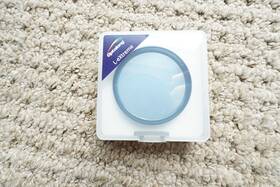
( Brand: Optolong ), ( Manufacturer Part Number: OTL-LXT-200 ), ( Part Type: Light Filter ), ( Filter Effects: Dual Image )
Review OPTOLONG L extreme Dual Bandpass Light Pollution Reduction Imaging Filter Inch
The Optolong L-eXtreme Dual Narrowband Imaging Filter (OTL-LXT-200) is an exceptional optics tool designed for astrophotography enthusiasts and professionals seeking to capture stunning images of the night sky. This filter is specifically engineered for dual-bandpass emission nebulae imaging, effectively reducing light pollution and enhancing the contrast between the desired celestial objects and the surrounding background.
The OTL-LXT-200 is made of high-quality optical glass, ensuring minimal light scattering and maintaining sharpness and resolution of the captured images. It features two narrowband passbands, one for Hydrogen-alpha (H ) at 656.3nm and another for Oxygen-III (OIII) at 501.7nm. These passbands are specifically tailored to isolate the emission lines from these elements, which are commonly found in emission nebulae, planets, and other deep-sky objects.
The filter's dual-bandpass design allows it to effectively filter out unwanted light pollution, including city lights, streetlights, and moonlight. This results in a significantly lower background noise, allowing the true colors and details of the targeted celestial objects to stand out. Furthermore, the filter's narrowband passbands minimize the impact of atmospheric absorption, resulting in higher color fidelity and contrast in the final images.
The OTL-LXT-200 is also well-designed for easy use. It features a 2-inch diameter thread, making it compatible with most telescopes and imaging equipment. The filter is also coated with Optolong's proprietary Multi-Coating technology, ensuring minimal reflection and ghosting, resulting in high-quality images.
In summary, the Optolong L-eXtreme Dual Narrowband Imaging Filter (OTL-LXT-200) is a high-performance astrophotography tool that effectively reduces light pollution, enhances contrast, and captures stunning images of emission nebulae. Its dual-bandpass design, high-quality optical glass, and easy-to-use design make it an excellent choice for both amateur and professional astrophotographers.
Pros of buying Optolong OTL-LXT-200 L-Extreme Dual Bandpass Light Pollution Reduction Imaging Filter:1. Enhances image quality: The filter is designed to block light pollution and reduce interference from city lights, stars, and other sources, resulting in clearer and more detailed images.
2. Wide bandpass: The filter has a wide bandpass that allows it to capture both H and OIII emission lines, making it ideal for deep-sky imaging.
3. High transmission: The filter has a high transmission rate, allowing more light to pass through and reach the sensor, resulting in brighter and more detailed images.
4. Durable and scratch-resistant: The filter is made of high-quality materials that are resistant to scratches and damage, ensuring long-term durability.
Cons of buying Optolong OTL-LXT-200 L-Extreme Dual Bandpass Light Pollution Reduction Imaging Filter:1. Expensive: The filter is relatively expensive compared to other filters, which may be a barrier for some amateur astronomers.
2. Requires calibration: The filter may require calibration to ensure accurate color representation in the final image.
3. May not be suitable for all telescopes: The filter may not be compatible with all telescopes, so it's important to check the specifications before making a purchase.
Conclusion:If you're serious about deep-sky imaging and want to capture high-quality images with enhanced detail, the Optolong OTL-LXT-200 L-Extreme Dual Bandpass Light Pollution Reduction Imaging Filter is an excellent investment. Its wide bandpass, high transmission rate, and durability make it a top choice for many amateur astronomers. However, its high price and potential compatibility issues with some telescopes may be a drawback for some. Ultimately, the decision to purchase the filter depends on your budget, imaging goals, and the specifications of your telescope.
Recommendation:If you're looking for a high-quality filter for deep-sky imaging, the Optolong OTL-LXT-200 L-Extreme Dual Bandpass Light Pollution Reduction Imaging Filter is a great option. However, before making a purchase, make sure to check the compatibility of the filter with your telescope and consider your budget. Additionally, be prepared to calibrate the filter to ensure accurate color representation in your images. Overall, the filter's benefits outweigh its drawbacks, making it a worthwhile investment for serious amateur astronomers.
Details:
Filter Size: During the manufacturing process, high-precision grinding and polishing is used to ensure that substrate parallelism greater than 30 surface accuracy better /4. Optolong 2 L-eXtreme Dual Band 7nm HA/OIII Filter: The filter is a bandpass that isolates the H-Alpha and Oxygen III emission lines to maximize signal-to-noise ratio between nebulae. For those who live in areas with higher levels of light pollution or for would like to image during times where the Moon is bright, this threaded L-eXtreme filter an excellent tool their toolbox.
This type of manufacturing technology also provides stability on the central wave length so there is no deviation during temperature changes. IAD increases film firmness, consolidates membrane compactness, and changes vacuum coating material characteristics. I am seedling it because no longer interested in but would be a great addition to your kit. When it comes to quality control Optolong ensures that each filter is examined by and Laser Interfered for spectrum characteristics surface accuracy respectively.
Optolong has ensured that the L-eXtreme filters do not transmit between H-beta and OIII lines, as there are no nebula lines. When compared to the Optolong L-enhance Teri-band filter, dual band only emits Ha and OIII emission lines rather than filters transmission of HBO, Ha. It is in excellent condition. Optolong L-eXtreme Dual Band Filter Specifications.
Limiting the transmission this way means that light pollution is blocked so nebula signals are boosted and background of sky becomes darker for better contrast during imaging. Substrate: B270.
part #: otllxt200 prices
- $274.54-$349.95
specifications filtecam:
- brand: Optolong
- mpn: Otl-lxt-200
- part type: Light Filter
- filter effects: Dual Image
payments filtecam:
- other
- wallet: Google-pay
- credit card: American-express
shipping filtecam:
- service: USPS Priority Mail
- class: Expedited
- carrier: USPS
- type: Calculated
- transit: 5-9 Days
- cost: $7.58
returns filtecam:
- policy: No Returns
seller filtecam:
- # reviews: 19
- rating: 100.0%
- city: Bozeman, Montana
general filtecam:
- Cameras Photo > Lenses Filters > Filters
- condition: Used
offer filtecam:
- quantity: 1
- started: August 7, 2024
- options: Ship-to-home
- availability: In Stock
- best offers: True
- sold: 0
Optolong OTL-LXT-200 Is Similar To:
- Optolong Uv ir-cut-filter-2 Uv ir Cut Filter 2 Inch With Zwo Drawer (39.3% similar) Used in new condition. This filter is light used but optically in perfect condition. This is a perfect pair with the zoo ASI533MC pro I also have for sale. Comes with the zoo 2 filter drawer which is used minor cosmetic signs of use but 100% functional. Please reach out with any questions. Optolong ...(August 16th, 2024)
- Optolong 11105 Filter 2-inch L-quad Enhance (32.1% similar) Like new condition. 2 inch Optolong quad enhance filter, used about 5 times, but am selling my Astor gear because I just do not have time to it. No defects or blemishes on the filter...(November 21st, 2024)
- Optolong 971991895132 Lrgb Filter Set 1.25 Inch (41.1% similar) Brand new Optolong rugby filter set 1.25 , manufacturer model: fine-optically polishing for double-sides ensures accurate /4 wavefront...(July 26th, 2025)
- Optolong 971991891219 L-pro 1.25 Inch Mounted Round Filter (34.2% similar) Product features. L-pro enhances the transmission of major emissions from nebula while offering great colour balance with its wide yet effective light pollution cutting transmission band.the balanced allows objects emission spectrum such as galaxies to be imaged minimal colour cast easier correct in...(November 9th, 2025)
- Optolong 11104 L-pro Filter New Frame Version Compatible With Sony Full Micro (31.6% similar) Other filters are unable to achieve this level of performance. L-pro filter information: brief introduction the filter offers outstanding color balance performance in suburban regions with slight light pollution. Its multi-bandpass design ensures great color reproduction, and it is a low cast filter...(February 24th, 2026)